VERO.
The sustainable electric toothbrush.
00

problem
Conventional electric toothbrushes are a disaster when it comes to circular economy strategies. They contain various electrical components that cannot be repaired without the necessary technical expertise if they fail. The batteries, in particular, pose a major problem, as they are usually the component that breaks down the fastest. Not only is it often difficult to open the toothbrushes at all, but in most cases the batteries are also soldered to the circuit board. This creates problems not only in terms of repairability but also makes recycling more difficult. Other issues come into play here as well, such as valuable materials like copper coils, which are permanently encased in epoxy resin within the charger. Another problem arises during use: the brushes often incorporate mechanical components, making them complex and expensive.
solution
Vero is a completely new design concept that ensures easy access to all components to facilitate repair and recycling of the toothbrush. The housing can be easily opened using a bayonet lock. The internal components—such as the motor, circuit board, and battery—are mounted on a removable rail, making them easy to take out. The battery is a standard 18650 format. Additionally, the problem of complex brush heads is solved by the fact that the bristles can be replaced individually, while the shaft can be reused—this not only saves resources but is also easy on the wallet. Vero’s design is intentionally simple and robust. The hexagonal shape prevents the toothbrush from tipping over when it is set down to apply toothpaste. Standards were also adopted for the charging mechanism. The toothbrush can be charged via the widely used Qi2 standard—just like smartphones or smartwatches. A form-fit connection with the charging plate ensures precise positioning of the brush.
Driven by the vision of creating the sustainable dental cleaning solution of the future without compromising on performance, Vero was born.
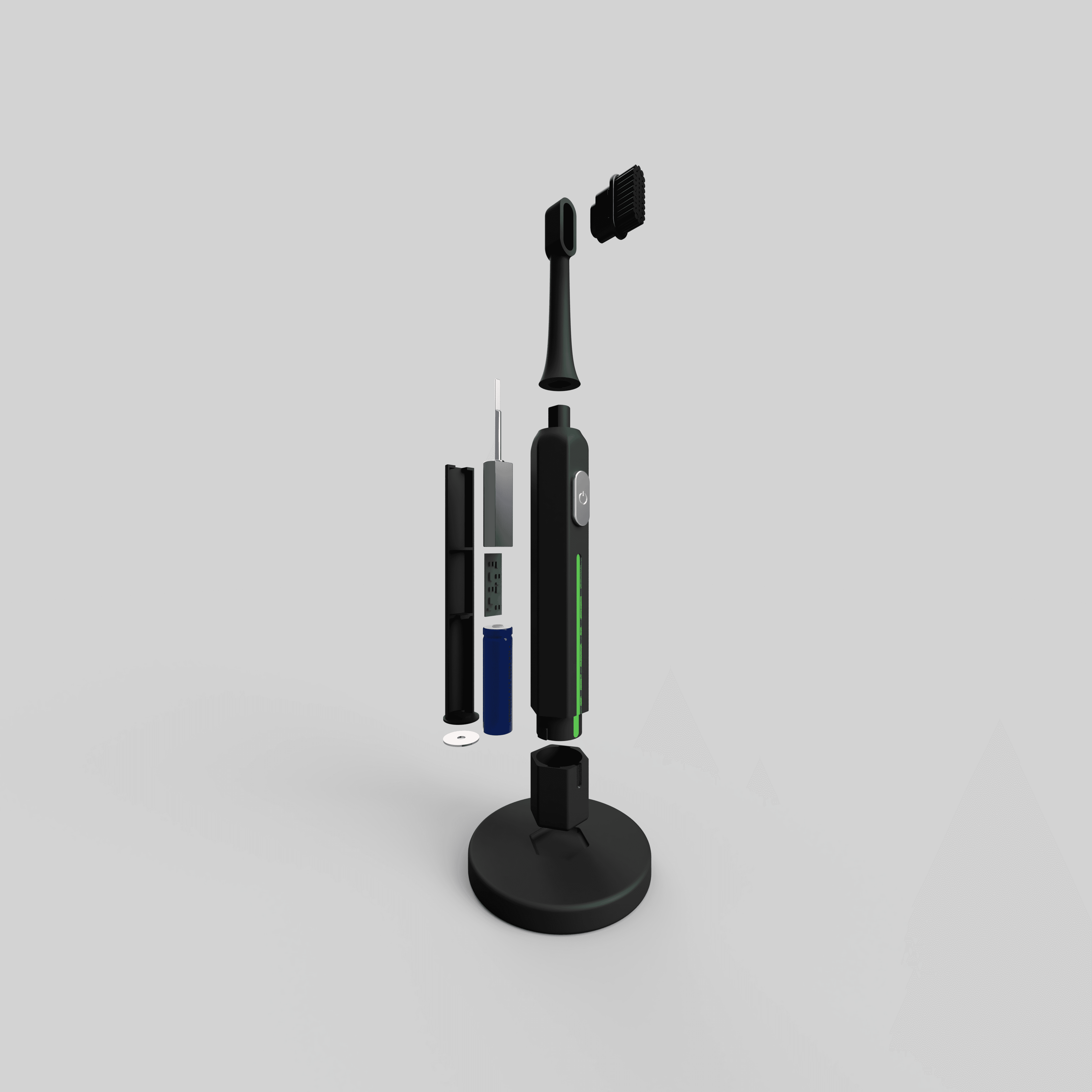
Vero’s vision began with a technical analysis of household products we use every day. Electric toothbrushes stood out as particularly problematic, as they are virtually impossible to repair even when they have a simple defect, such as a broken battery. A better solution was needed. For the sustainability concept, I opted for an approach that focuses primarily on repairability—significantly improving the product’s lifespan compared to competing products while also facilitating recycling. This approach also helps retain customers longer through the sale of replacement parts.
Next, the critical components were identified. The battery, charger, and brush heads were the main areas of concern. The goal was to improve these components. Instead of a soldered-in battery, a standard 18650 battery should be able to snap into the housing. The charger should adopt a widely used standard. The options were USB Type-C and the Qi2 inductive standard. The latter was chosen because a USB port could become clogged with prolonged use. Vero’s cleaning effect is achieved through sound. This allowed me to redesign the brushes from the ground up. A two-piece design with individually replaceable heads was chosen—this is easier on both the user’s wallet and the planet.
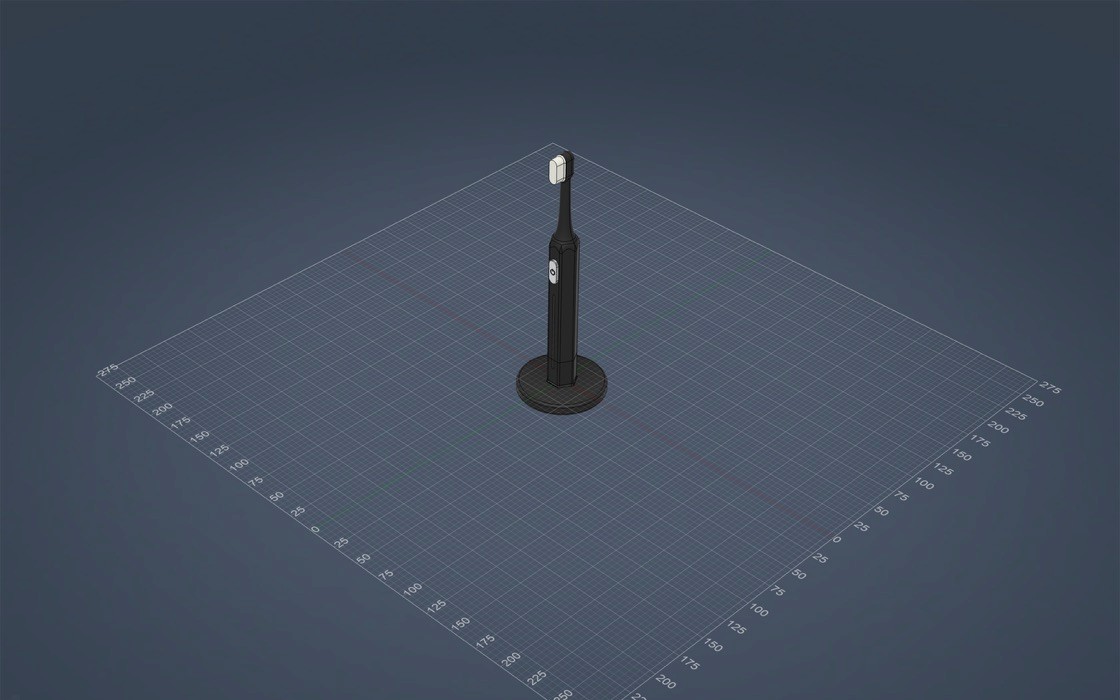
Vero’s design was intended to appeal to a broad customer base. The design was meant to appear simple and understated, yet exude robustness. The motto: quality and durability over unnecessary features and gimmicks. At the same time, the toothbrush should feel like a premium product. Something you buy once and that stays with you for a long time. That’s where the analogy of a good pen came from. A personal companion, simple yet well-thought-out. The shape was designed to be hexagonal. This prevents it from tipping over annoyingly when you set it down to apply toothpaste. It also allows for a secure fit with the charger in various orientations. The base of the housing can be removed using a bayonet lock. Inside, all components sit on a rail that can be pulled out downward. An LED charging strip serves as a visual connecting element between the two housing components.
year
2024
timeframe
1 semester
tools
Fusion 360, Blender
category
Personal Project
see also
